
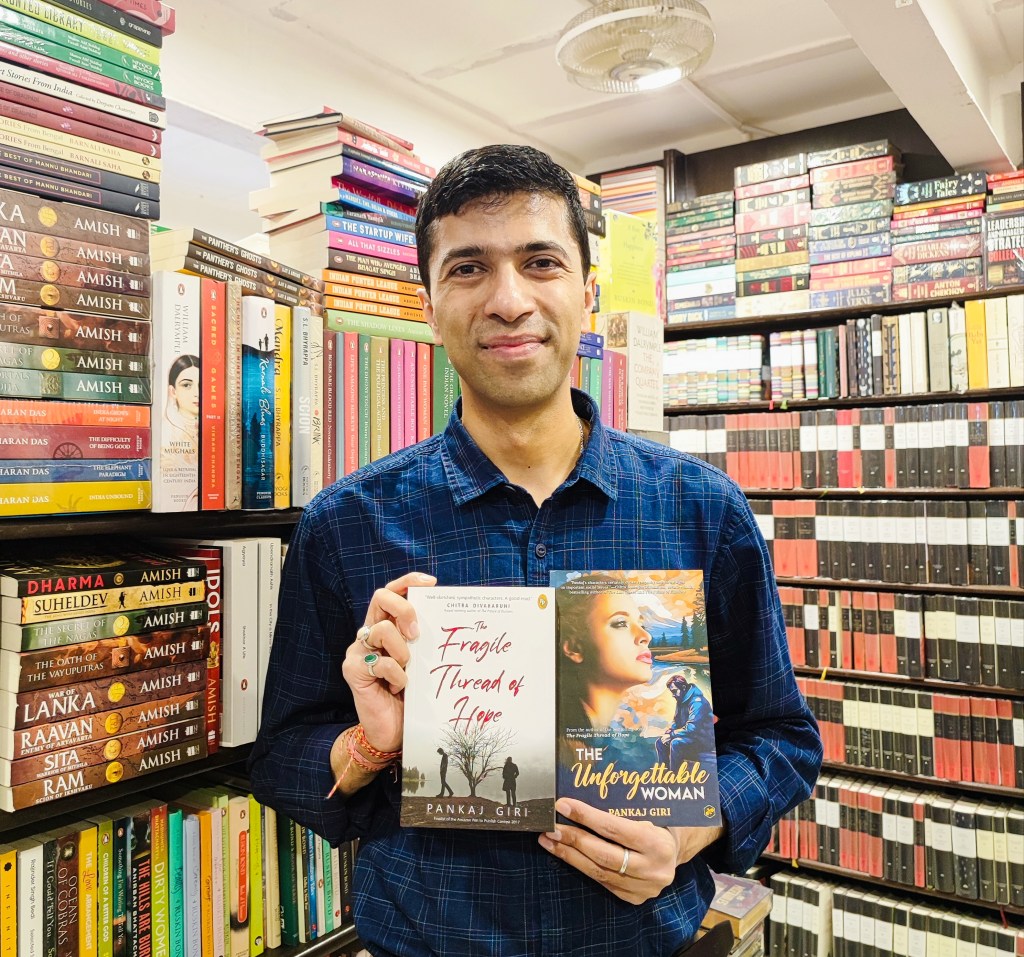
Q1. Tell us something about yourself?
A. I am a silent, introverted person who likes listening to music, reading books, and watching movies and TV shows.
Q2. A job in the Government sector and a writer of two books. What inspired you to be a writer and how has this transition been so far?
A. I used to write occasionally in my school days. I had contributed a few articles for my school magazine, and it was always a pleasure to see my name in print, but I had never seriously considered becoming a writer. During my college days in Bangalore, I was immersed in my studies and in developing my career. But somewhere in 2011-12, I somehow began entertaining thoughts on writing and started a cricket satire blog. One day, one of my friends read one of the posts and called me, suggesting that I collaborate with him to pen a book based on some of our college escapades, but I brushed him off, dismissing the seemingly ridiculous idea.
However, a year later, a sudden incident turned my life upside down. My father passed away, and I had to relocate to Gangtok. I was struggling to cope with the drastic change in my life when, one day, the same friend called me, reintroducing the idea of writing a book, saying that doing so might also help me divert my mind from the pain. I went ahead with it, and soon, it felt like I had rediscovered a lost passion. I fell in love with writing, and although the collaborative book didn’t succeed, it paved the way for my solo fiction novel, The Fragile Thread of Hope. After that, there was no looking back for me. Probably, I was destined to become an author.
The transition has been smooth, and I am enjoying my stint as a part-time writer. Writing has brought me a lot of fame and several accolades and has become an integral part of my identity.
Q3. From e-book to a published author with one of the Leading publishers “Fingerprint”. How does it feel and what challenges did you face for publishing your first book?
A. Like almost every author out there, I have faced several challenges in my writing journey, the lack of response and rejection from publishers being the paramount and obvious challenge. Initially, even the manuscript of The Fragile Thread of Hope was rejected by all publishers. Then, I decided to self-publish the book. Coincidentally, at that time, the first edition of the Amazon Pen to Publish Contest was being organized. I participated in it, and by God’s grace, I was selected as a top 5 finalist. After that success, when I resubmitted my manuscript to the publishers, thankfully, Fingerprint Publishing, one of the top Indian traditional publishers, accepted my manuscript, leaving me elated.
Q4. What inspired you, to write books?
A. I think I have already answered this.
Q5. Your books were a commercial success. How does it feel. Share your emotions with us?
A. It feels heartening to know that the book did well commercially. However, what gives me even more satisfaction is that the book was loved by almost everyone who read it.
Q6. Generally, most of the people write novels, some way or the other they are associated with the story. Is it your story in some way?
A. Yes, a part of my own life and my experiences are reflected in both my books.
Q7 In July 2020, you won the best Author at Indian Literary Awards. How does it feel?
A. It feels good that The Fragile Thread of Hope was nominated for the award, and I’m grateful to all my friends, family, readers, fellow writers, and well-wishers who voted for my book, making it the winner.
Q8. Which character in your books, you are most connected with and Why?
A. In my first book, I think it has to be Soham because Soham and I share many characteristics. Moreover, even I have lost my father like Soham did, and in fact, his emotions are a reflection of my real feelings.
In the second book, it is Savitri. Although she is not the protagonist, she is the central character, the thread connecting several lives. Moreover, she is an embodiment of strength, a woman who holds her own in the face of societal orthodoxies and other adversities. I enjoyed developing her character the most.
Q9 Tell us about both your books. A quick brief about it?
A. The Fragile Thread of Hope: Seasoned with the flavors of exotic Nepalese traditions and set in the picturesque Indian hill station, Gangtok, The Fragile Thread of Hope explores the themes of spirituality, domestic abuse, alcoholism, love, and guilt while navigating the complex maze of family relationships.
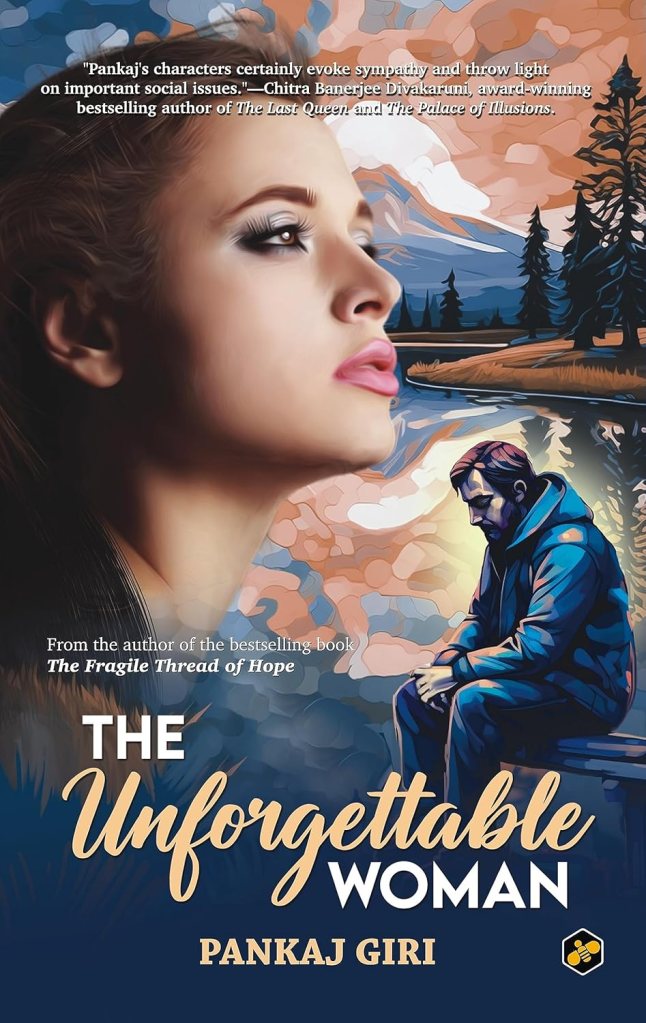
The Unforgettable Woman: Set in fictional towns in the beautiful state of Sikkim, The Unforgettable Woman is an inspirational, heart-touching story that explores the themes of regret, love, drug abuse, and forgiveness and shows how a single secret can influence several lives.
Q10. How long did it take you to complete your books?
A. It took approximately two years to write each book, including self-edits and a professional edit.
Q11. Are there any authors or books that inspired your writing Journey?
A. Chitra Banerjee Divakaruni is my literary idol, and I love her contemporary fiction novels like Sister of My Heart, Before I Visit The Goddess, and Independence. I also draw inspiration from every book I read and try to learn something from the author.
Q12. “The Fragile Thread of Hope” is an inspirational fiction. And “The Unforgettable woman” is an emotional inspirational story. A unique title of both your books. How did that inspiration come from?
A. The Fragile Thread of Hope is primarily about finding hope in the darkest of times. The characters face different tragedies in their lives but never lose hope. While writing the first draft of The Fragile Thread of Hope, I was reading The Kite Runner by Khaled Hosseini. I came across a sentence where a character hangs on to a thread of hope despite the adverse circumstance he/she is facing. That phrase stuck with me, and I found it suitable for my story. However, the characters in my book struggle to hold on to hope in their lives, the darkness becoming overwhelming at times. That’s why I added the adjective fragile, and thus the title “The Fragile Thread of Hope” came into being.
The Unforgettable Woman signifies Savitri, the woman who plays a pivotal role in the story and whose memories remain with a particular character for a long time. So, it was somewhat easier to coin this title.
Q13. What is your favorite genre in writing or Reading both?
A. I love to read books in the same genre I write, i.e., contemporary/literary fiction. I mostly prefer reading Indian authors.
Q14. What was the most surprising review you got from your readers which made you smile?
A. It was a review I received for The Fragile Thread of Hope, where the reader loved the book so much that he felt it should win the Booker Prize. Obviously, that is never going to happen, but the fact that he felt that the book deserved such high acclaim was hugely satisfying for me as an author. It made me smile.
Q15. Do you outline your stories, or do you prefer to write spontaneously?
A: I prefer to outline my stories before I start writing as it gives me the framework for my stories and helps me avoid writer’s block.
Q16. Which of your books is your favorite and why?
A: Both my stories are my babies, and it is tough to choose a favorite.
Q18. What’s the most challenging scene or chapter you’ve written?
A: Perhaps the most challenging portion of a book I’ve written is the couple of chapters revealing the secret in The Unforgettable Woman. It had to be done subtly, ensuring all the plot threads had a proper resolution and the character arcs were rendered complete. And it felt amazing when one of the top reviewers in the country applauded that aspect of my book in a recent review.
Q19. How do you connect with your readers?
A: I love connecting with my readers via social media, email, and WhatsApp. I always respond to them and thank them for reading my books.
Q20. Give some advice to new writers and also message to your readers.?
A: I’d like to express my heartfelt gratitude to all my readers for choosing to read my books and for your heartwarming messages and reviews. I hope to keep writing new books to entertain and inspire you.
The one piece of advice I want to give aspiring or new writers is to ensure that you polish your writing skills before venturing toward writing. It is imperative to learn about plotting, character development, POV styles, basic grammar, and punctuation before you start your writing journey. There are a lot of free articles on the web that can help you in that regard.
Secondly, self-edit your work as much as possible before submitting it to agents or publishers. If it is financially viable, opt for a professional edit of your book. You need to ensure that the book is as error-free as possible before you initiate submission as that will amplify the chances of acceptance.
And finally, believe in yourself and keep writing and improving. One day, you will taste success.
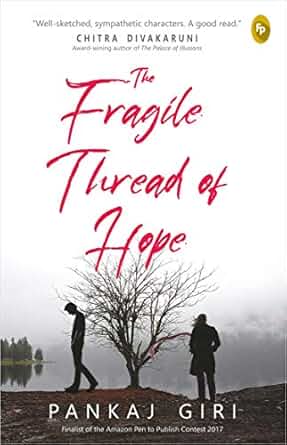
The Fragile Thread of hope: https://amzn.in/d/ddcG5QC
The Unforgettable Woman: https://amzn.in/d/2XfwbcC




Leave a comment