
What is Anant Chaturdashi?
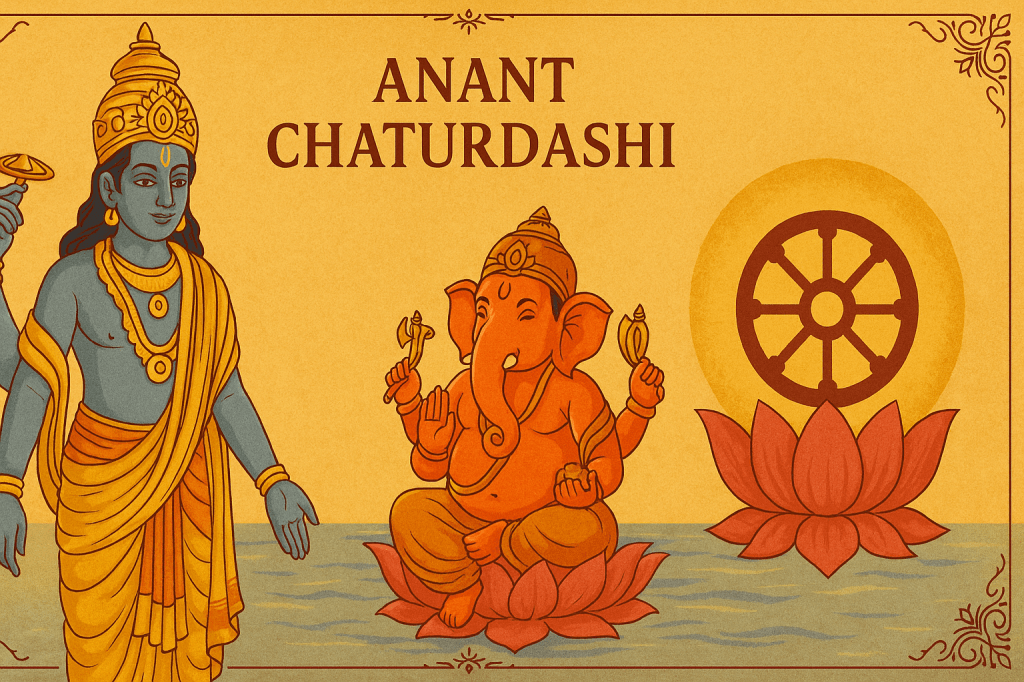
Anant Chaturdashi is a significant Hindu festival observed on the 14th day of the bright fortnight (Shukla Paksha) of the Bhadrapada month. The word Anant means infinite, symbolizing the eternal and unending form of Lord Vishnu. Devotees worship Lord Vishnu on this day, seeking his infinite blessings, protection, and prosperity.
It also marks the culmination of the 10-day Ganesh Utsav, when devotees bid farewell to Lord Ganesha with grand processions and immerse the idols in water bodies, symbolizing the cycle of creation and dissolution in nature.
— ✦ —
The Story Behind Anant Chaturdashi
According to scriptures, a sage’s wife, Sushila, tied a sacred thread called Anant Sutra on her wrist after worshipping Lord Vishnu. With this, she was blessed with abundance, peace, and protection. The ritual of tying this thread continues today, where devotees (especially men) tie the red thread on their arm, believing it ensures prosperity and safeguards them from misfortunes.
— ✦ —
Rituals and Significance
Worship of Lord Vishnu in the form of Anant (infinite protector).
Tying the Anant Sutra, a sacred thread with 14 knots, representing infinite faith.
Ganesh Visarjan, where devotees immerse Ganesha idols, praying for his return the next year with renewed blessings.
Fasting and Prayers, where people observe vows for peace, health, and family harmony.
— ✦ —
Jain Connection: Dashlakshana (Dakshlashni) Parva
On the same day, Jains—especially Digambar Jains—celebrate the conclusion of their sacred Dashlakshana Parva (also called Dakshlashni). This is a 10-day festival of self-discipline, reflection, and purification that begins right after Paryushan Parva.
Each day is dedicated to one of the 10 supreme virtues (Dash Lakshanas) such as forgiveness, humility, truth, contentment, and self-restraint. The festival ends on Anant Chaturdashi with prayers, charity, and a resolve to live a more righteous and disciplined life.
— ✦ —
Unity in Diversity
Anant Chaturdashi beautifully reflects India’s spiritual richness—while Hindus honor Lord Vishnu and farewell Ganesha, Jains conclude their period of spiritual reflection and purification. Both paths emphasize one truth: letting go of ego, embracing discipline, and inviting infinite blessings into our lives.
— ✦ —
Cosmic Reminder
When we tie the sacred thread of faith or practice self-discipline, we connect with the eternal energy of the universe. The festival is not just about rituals, but about surrendering to the infinite, letting go of the temporary, and seeking everlasting peace and happiness.
— ✦ —
Michhami Dukkadam: Seeking Forgiveness
The spirit of Michhami Dukkadam is an integral part of Jain tradition. On the concluding day of Paryushan or Dashlakshana Parva, Jains humbly seek forgiveness from everyone they may have hurt—knowingly or unknowingly—through thoughts, words, or actions.
The phrase “Michhami Dukkadam” translates to:
“If I have caused you hurt in any way, I seek forgiveness with folded hands.”
This beautiful practice is not only about asking for forgiveness but also about letting go of grudges, cleansing the heart, and starting afresh with purity and peace. It reflects the universal truth that forgiveness is the foundation of harmony and spiritual growth.
— ✦ —
A Shared Message of the Day
Hindus immerse Lord Ganesha, embracing the cycle of renewal.
Jains conclude their period of self-discipline, seeking forgiveness with Michhami Dukkadam.
Both faiths emphasize humility, surrender, and infinite blessings.
Thus, Anant Chaturdashi and Michhami Dukkadam together remind us that true spirituality lies in letting go—with faith, forgiveness, and a heart open to infinity.
With love & cosmic guidance,
Himani Goyal





Leave a comment