
— ✦ —
Introduction
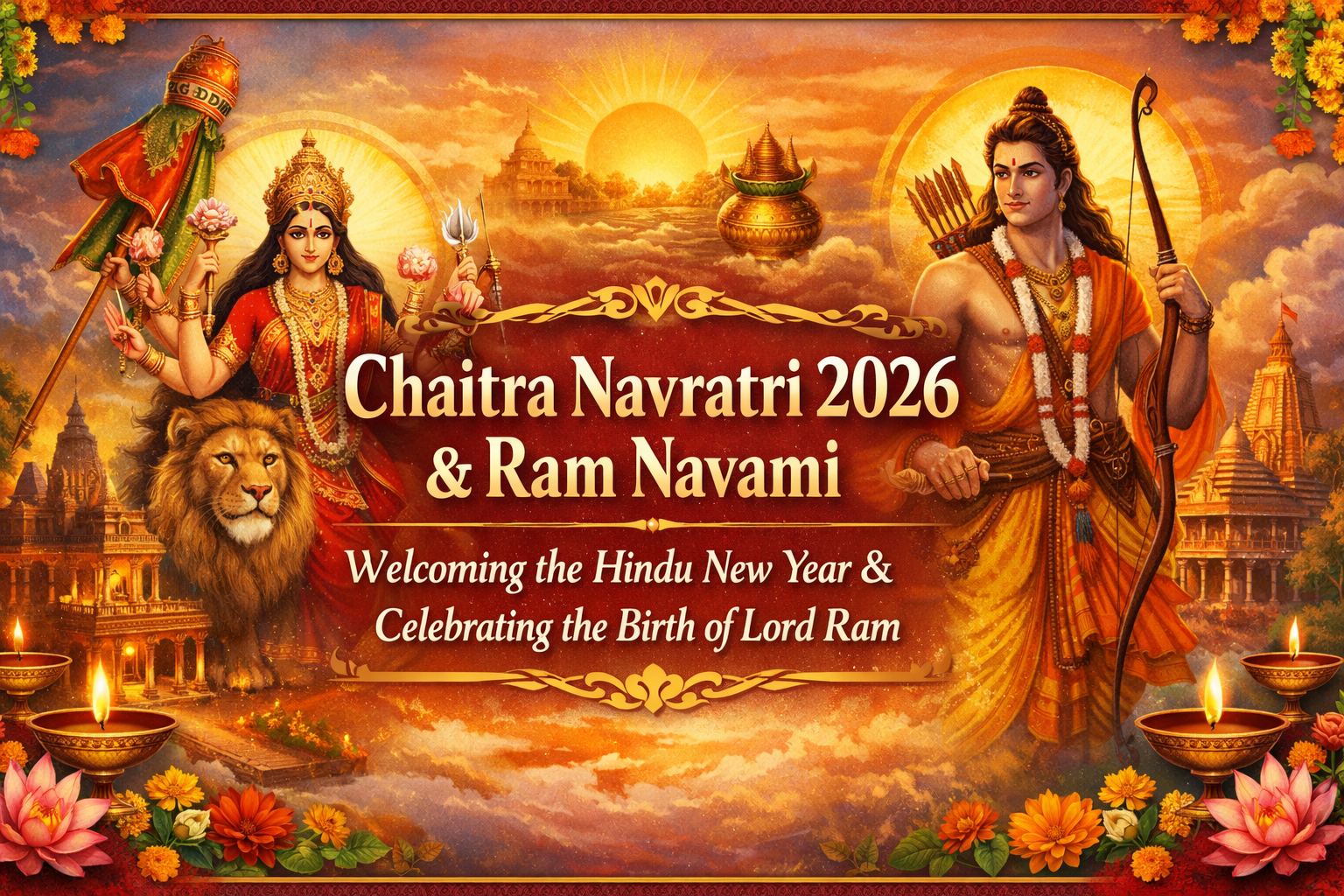
Every year, the arrival of Chaitra Navratri marks a powerful spiritual beginning in the Hindu calendar. It is a time of devotion, purification, and renewal when devotees worship the nine forms of Goddess Durga for nine sacred days.
In 2026, Chaitra Navratri begins on 19 March, a day that is also celebrated across India as the Hindu New Year under different regional names such as Ugadi, Gudi Padwa, and Yugadi. This sacred period culminates on the ninth day with Ram Navami, the birth celebration of Lord Ram, symbolizing righteousness and divine justice.
Understanding the deeper meaning of Chaitra Navratri helps us connect with the spiritual rhythm of the universe and the timeless wisdom of Sanatan Dharma.
— ✦ —
What is Chaitra Navratri?
Chaitra Navratri is a nine-day festival dedicated to the worship of Shakti (Divine Feminine Energy). It falls in the month of Chaitra according to the Hindu lunar calendar, which usually corresponds to March–April.
During these nine days, devotees worship the nine forms of Goddess Durga, known as Navadurga, each representing different aspects of divine power.
The Nine Forms of Durga Worshipped
-
Shailputri – Daughter of the mountains, symbol of strength
-
Brahmacharini – Goddess of penance and devotion
-
Chandraghanta – Warrior form symbolizing courage
-
Kushmanda – Creator of the universe
-
Skandamata – Mother of Lord Kartikeya
-
Katyayani – Goddess of divine justice
-
Kalaratri – Destroyer of negativity
-
Mahagauri – Symbol of purity and peace
-
Siddhidatri – Bestower of spiritual powers
Devotees observe fasting, prayers, meditation, and chanting of Durga mantras to seek divine blessings for health, prosperity, and spiritual growth.
— ✦ —
Why Do We Have Navratri Twice a Year?
Many people wonder why Navratri is celebrated twice annually.
In Hindu tradition, there are four Navratris, but two are widely celebrated:
1. Chaitra Navratri (March–April)
Marks the beginning of the Hindu New Year and the arrival of spring.
2. Sharad Navratri (September–October)
Celebrated during autumn, leading to Dussehra and Diwali.
These two Navratris occur during seasonal transitions, when the body and mind naturally undergo energetic shifts. Ancient sages considered these periods ideal for:
-
Detoxification through fasting
-
Spiritual discipline
-
Meditation and prayer
-
Resetting physical and mental balance
Thus, Navratri is not just a festival—it is a cosmic reset for mind, body, and soul.
— ✦ —
Chaitra Navratri and the Hindu New Year
The first day of Chaitra Navratri (19 March 2026) is celebrated as the Hindu New Year in many regions of India.
Different states celebrate it with unique traditions:
Ugadi (Karnataka, Andhra Pradesh, Telangana)
The word Ugadi comes from “Yuga + Adi,” meaning the beginning of a new age.
People celebrate by:
-
Cleaning and decorating homes
-
Preparing the traditional Ugadi Pachadi, symbolizing the six flavors of life
-
Listening to the Panchanga Shravanam (annual astrological predictions)
Gudi Padwa (Maharashtra)
In Maharashtra, the festival is called Gudi Padwa, where a Gudi flag is hoisted outside homes.
The Gudi symbolizes:
-
Victory of good over evil
-
Prosperity and divine protection
-
The start of a fresh and auspicious year
Both festivals represent renewal, hope, and a fresh cosmic cycle.
— ✦ —
Ram Navami – The Ninth Day of Navratri
The ninth day of Chaitra Navratri is celebrated as Ram Navami, which marks the birth of Lord Ram, the seventh incarnation of Lord Vishnu.
In 2026, Ram Navami falls on 27 March.
Lord Ram was born in Ayodhya to King Dasharatha and Queen Kaushalya during the Treta Yuga.
He is revered as Maryada Purushottam, the ideal human being who represents:
-
Dharma (righteousness)
-
Truth
-
Honor
-
Compassion
-
Duty toward family and society
How Ram Navami is Celebrated
Devotees observe this day by:
-
Reciting Ramayana or Ramcharitmanas
-
Chanting “Shri Ram Jai Ram Jai Jai Ram”
-
Visiting temples dedicated to Lord Ram
-
Performing bhajans and kirtans
The celebration reminds devotees that truth and righteousness ultimately triumph over evil, just as Lord Ram defeated Ravana.
— ✦ —
Spiritual Meaning of Chaitra Navratri
Chaitra Navratri is not only about rituals—it represents an inner spiritual journey.
Each day symbolizes the awakening of divine energy within us.
The deeper message of Navratri teaches us to:
-
Remove negativity and ego
-
Strengthen faith and discipline
-
Connect with the divine feminine energy within
-
Walk the path of truth and righteousness
The festival concludes with Ram Navami, reminding us that when we purify our mind and heart, the divine consciousness (Ram) awakens within us.
— ✦ —
Cosmic Reminder
Every Navratri invites us to renew our life with devotion, courage, and wisdom.
As the Hindu New Year begins with Chaitra Navratri, it becomes a beautiful opportunity to set spiritual intentions, seek divine blessings, and begin the year with clarity and faith.
Just like the Goddess removes darkness and Lord Ram restores righteousness, we too can transform our lives through faith, discipline, and positive action.
— ✦ —
With love & cosmic guidance,
Himani Goyal Soul Studio
himanigoyal21.com


Leave a Reply